
When learning a language, prepositions can be one of the hardest things to grasp. These short connecting words generally don’t translate well between languages and can seem to be chosen arbitrarily. For instance, all Spanish learners have been haunted by por o para at some point. Or, in French, why is ‘thinking of you’, penser à toi [lit. thinking to you] instead of penser de toi? And it’s not any easier in English. I remember my dad got mad at me once and said: “I don’t want to scream on you… in you… to you…”, only to be corrected by my little cousin.
The point is, prepositions are hard, but Arabic prepositions are even harder.
Many common English prepositions tend to be very short, like “to“, “on“, or “at“, but they can’t beat Arabic prepositions, which can be as short as one letter. Even the longer ones are often shortened to one letter by native speakers. To make matters worse, these one-letter prepositions are simply attached to the beginning of the noun or verb they’re connecting, making it almost impossible for beginners to identify.
So, I decided to compile some of the one-letter prepositions I’ve come across and explain them with the help of Faraj Suleiman lyrics.
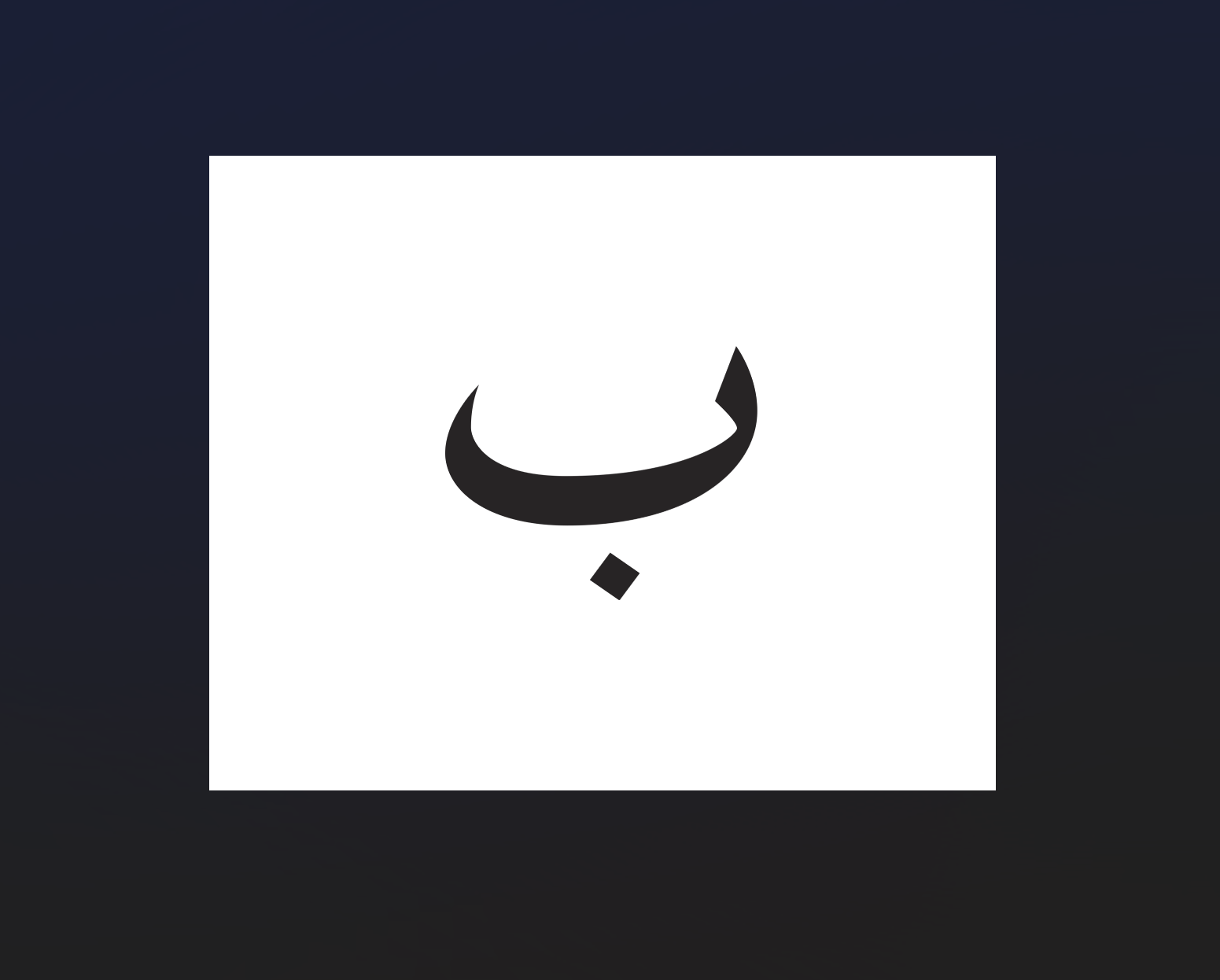
ب : with, in, at, on
Starting with ب, this preposition is attached to nouns to indicate location (in, at, on) or to mean “with”. It’s particularly confusing because all present indicative verbs in Levantine Arabic also start with the letter ب . Make sure you don’t confuse ‘ب + noun’ as a present tense verb.
شو بدك بجوزك ؟
What do you want with your husband?
قلبي بآخر الليل
My heart at then end of the night
ل : to, up to, until
ل means “to” when referring to a person or a place. Notice that when attached to the definite article, ال, the alif (ا) is contracted and is not written (see Wiktionary for the full explanation).
يرفع إيديه للسقف
He raised his hands to the ceiling (ل + السقف = للسقف)
Or in the name of the album itself:
جبنا للولد بيانو
We brought the boy a piano
[lit. we brought to the boy a piano]
Note that in English, the preposition is not always needed, unlike in Arabic. However, if we change the word order and say “we brought a piano to the boy”, the preposition is now necessary.
ك : like, as
كـأنّي بلمس خدّك
As if I’m touching your cheek
على: to, on
This is often shortened to ع and can be written separately or attached to the noun it’s connecting. The following is the same lyric written with all 3 spelling variations of على. Note that spelling in the dialect is not standardized and is heavily influenced by how the words are pronounced. If you listen to the song, you’ll notice that Faraj pronounces the whole word “على” instead of contracting it (probably because he needed more syllables for the line), which explains why he wrote it as such.
نِزْلَت على البحر جابت سمار
نِزْلَت ع البحر جابت سمار
نِزْلَت عـالبحر جابت سمار
She went down to the sea [and] got a tan
حتّى : until, up to
As a preposition, حتّى means “until” or “up to”, as mentioned above. It can also be used as a conjunction to mean “until” or “so that/in order to”. In both cases, حتّى can be shortened to simply تـ. The following lyric shows the shortened form of حتّى as a conjunction.
بس الإنسان ما اكتشف النار تيقعد جنب الدّفّـاي
But man didn’t discover fire [in order] to sit beside the heater
Bonus – ما : don’t, didn’t
ما is the word used to negate verbal phrases. It is not a preposition but can be shortened to just م and be appended to words similarly to the prepositions we just saw.
ومـمننساش نتمنّى ديفيد بوي يطلع عايش
(alternative with ما separate from verb) وما مننساش نتمنّى ديفيد بوي يطلع عايش
and we won’t [lit. don’t] forget to wish that David Bowie was alive




Leave a Reply